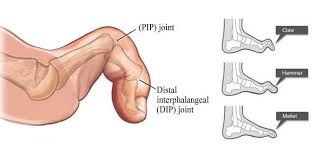
I suppose we should start with, what is a bunion? A bunion is a common deformity found usually within the first joint of the big toe. It is a slow dislocation or movement of the big toe towards the middle of your foot. In some cases it can occur on your pinky toe as well, in that case it is called a Tailor’s bunion or bunionette.
Bunions tend to develop in stages. The first is the inflammation stage. Here it can present as a red bump or swollen area below your big toe and can be painful within the joint. At this point the joint still has movement and is considered a mild form of a bunion. In the next stage the toe becomes more curved and the movement in the toe decreases. This occurs as it becomes more of a chronic condition and is no longer considered new. As the toe continues to deviate it can result in things like hammer toes, and reduce our ability to balance. Along with the decreased movement of the toe we may develop new foot pain in our arches, legs or back. Once a bunion is established they are usually pain free. Any pain felt in the area is usually a result of another condition.
Some causes of these deformities can be improper footwear, hereditary, past trauma to the foot, or if we were required to stand in one spot for long periods of time for work.
A couple things that you can do to aid in reducing the pain and severity of your bunion are, proper foot wear, routine visits with your Dr., Podiatrits or foot care nurse to monitor and help guide care for it. There are some exercises you can do as well to help keep the flexibility in the great toe. Inserts for between the toes and some bunion pads can be helpful as well. In extreme cases of bunions there can be an option of surgery to correct it.